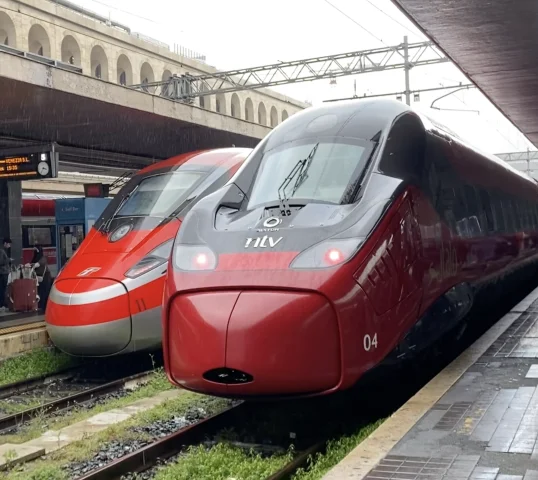
I've always preferred travelling by train, so when I was planning my route through Italy, taking the high-speed line from Rome to Venice wasn't really a question. The only decision left was which operator to book.
Italo or Trenitalia
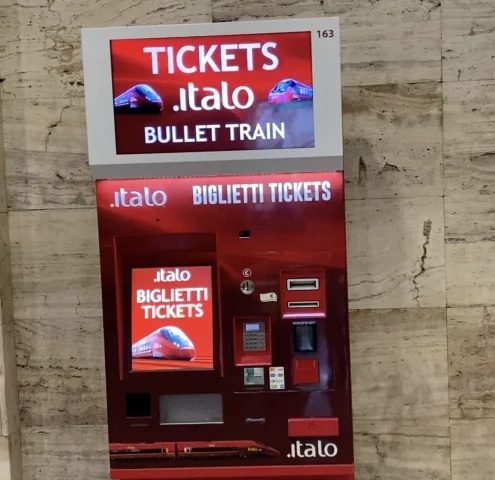
Italy runs two high-speed operators: Trenitalia, the larger state-run network, and Italo, a private operator covering most major cities. Trenitalia has the wider reach, but for my travel dates, Italo came out cheaper, so that's what I booked.
I went with Italo Prima Class — a step up in comfort with complimentary snacks included — after booking online around three weeks ahead. Booking directly through Italo's site was simple enough that I didn't need to compare elsewhere.
Roma Termini, three hours early
I got to Roma Termini about three hours before my 15:55 departure, more out of caution than necessity. It turned out to be a good call anyway — Termini isn't just a station, it's a small city in itself, with shops running from Gucci and Prada to bookstores and pharmacies. I had lunch and a coffee there before boarding, and the time went quickly.
What it's actually like on board
Boarding was smooth and well organised, which matched Italo's reputation. The Wi-Fi held up for the whole three-hour journey, the seats had genuinely good legroom, and Prima Class delivered on the snacks — though there's no restaurant car, just vending machines if you want more.
The speed is the part that's easy to underestimate until you're in it: the train peaked at around 289 km/h, but it stayed smooth and quiet enough that I could just watch the Italian countryside go by rather than brace for it.
The ride into Venice
The best part of the trip
Riding over water into Venice
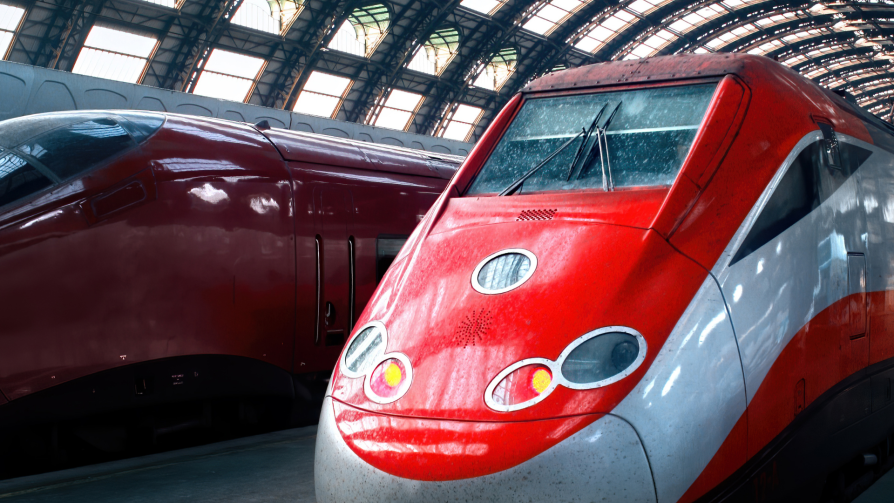
Between Venice Mestre and Venice Santa Lucia, the tracks run straight across the lagoon, and for a few minutes it genuinely feels like the train is gliding over water. It was drizzling lightly when we pulled into Santa Lucia, which somehow made it feel even more atmospheric. The train arrived exactly on time, and stepping off put me right at the edge of Venice's canals — my hotel was a short walk from the station.
Looking back, taking the train over flying or driving was the right call. No airport security to deal with, a more scenic route, and the convenience of arriving city centre to city centre rather than needing a transfer in from an airport.
Booking tips
- Book a few weeks ahead if you can — prices move, and I found a noticeably better fare booking three weeks out than I would have at the station.
- Travel light. Hopping on and off is easier without heavy luggage.
- Prima Class includes snacks, but bring your own extras if you're picky or the journey's longer than this one.
- Give yourself time at Roma Termini — it's worth exploring rather than just waiting at the platform.
- Be cautious on public Wi-Fi, as you would anywhere else.
My takeaway
Everything about the Italo trip from Rome to Venice was what I'd hoped for — fast, comfortable, and genuinely scenic. If you're deciding how to get between the two cities, the train beats flying or driving on every count that matters: time, comfort, and the view. [ADNAN INPUT NEEDED: anything you'd add in your own words here?]
How I know this
I took this exact route on Italo, Prima Class, booked about three weeks in advance. The pricing comparison with Trenitalia reflects what I found for my own travel dates, not a general claim about which operator is always cheaper.

Written by Ednan
Former university lecturer, now living between countries and writing down what I learn as I go. I've travelled to 18+ countries and about 9,500 of you have stuck around on YouTube. None of it is about ticking places off a list.
More about me →If this was useful, the Sunday email is more of it.
One weekly email covering what I've published, rule changes, and one thing worth reading. Leave any time.
Send itSome of this is easier to show than to write.
I film the trips as well — what places actually look like, what things cost, and the parts I got wrong. About 9,500 people watch along.
Watch on YouTubeNew videos when I have something worth showing.