ETIAS Delayed Again: You Still Don’t Need the Europe Travel Permit
ETIAS has been delayed again and currently has no confirmed launch date — here’s what travellers need to know about the Europe travel permit.
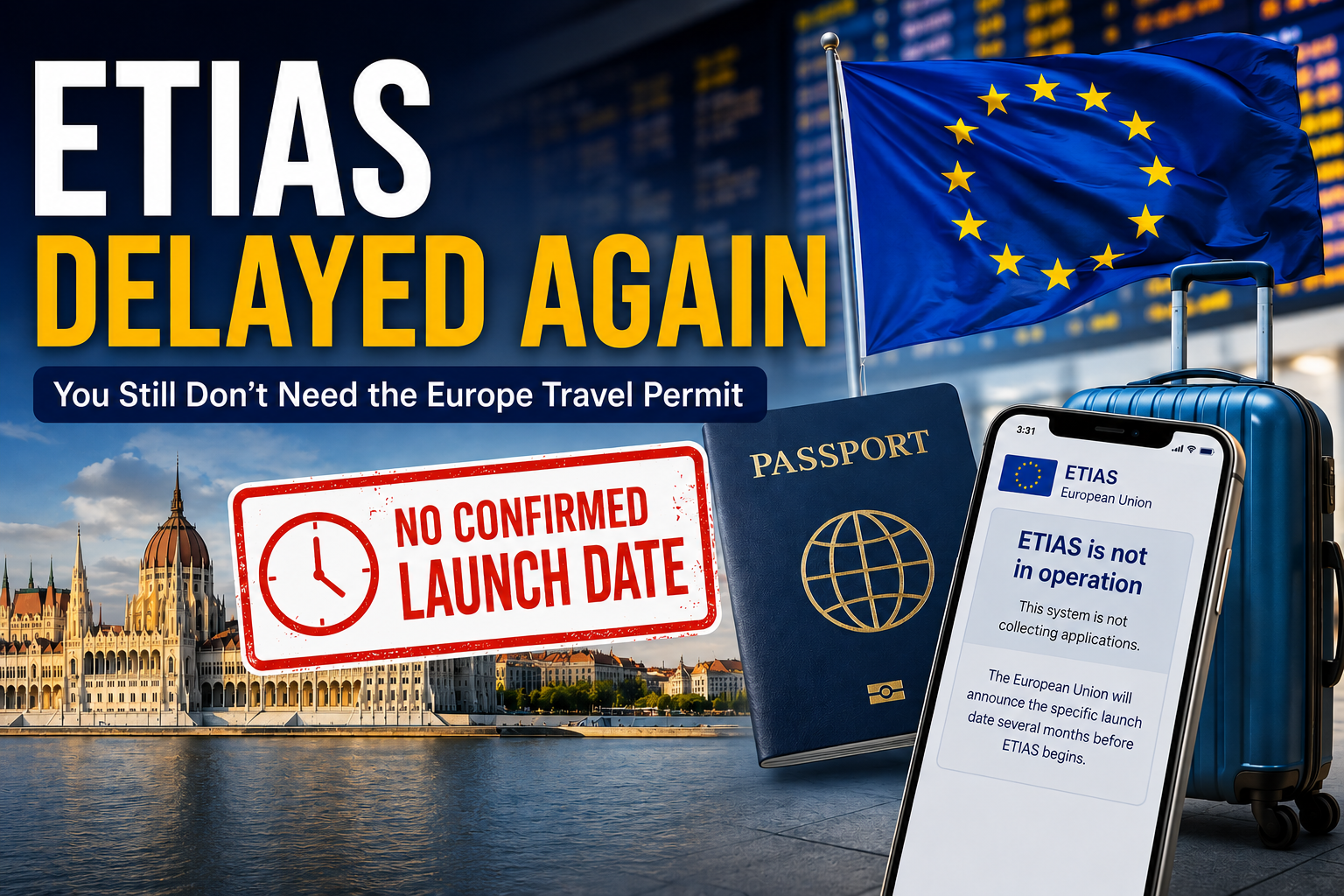
If you’re planning a trip to Europe and have been wondering whether you need to apply for ETIAS, there’s some good news for now: you don’t need to do anything yet.
The European Travel Information and Authorisation System, better known as ETIAS, has been delayed again, and there is currently no confirmed launch date. The EU’s official ETIAS website now says the system is not in operation and is not collecting applications — it also says the European Union will announce the specific launch date several months before ETIAS begins.
That means travellers from countries such as the UK, US, Canada and Australia who can currently visit participating European countries without a visa don’t need to obtain an ETIAS authorisation for their upcoming trips. And perhaps more importantly, you shouldn’t be paying a website claiming to process your ETIAS application right now.
Recent reporting has described this as an indefinite delay. That doesn’t necessarily mean ETIAS has been cancelled — the system is still being developed, but travellers currently don’t have a firm date to work towards. There is still discussion of a possible 2027 launch, but 2027 should not be treated as a confirmed launch date. The EU has said it will announce the actual date several months before the system goes live.
Do you need to apply for ETIAS now?
No. This is probably the most important part of the update.
So if you’re planning a European holiday, you don’t currently need to add ETIAS to your travel checklist. You should also be careful with websites advertising ETIAS applications or asking you to pay for an authorisation before the system has launched.
The EU itself warns about commercial intermediaries that may try to make travellers believe they are using an official ETIAS application channel, or charge additional fees.
What is ETIAS and who will need it?
ETIAS isn’t a visa. It’s a planned electronic travel authorisation for travellers from countries whose citizens can currently visit participating European countries without a visa for short stays. The EU currently lists 30 European countries that will require ETIAS for eligible visa-exempt travellers, including France, Germany, Italy, Spain, Greece, Switzerland, Norway and Iceland. It will also cover nationals of many visa-exempt countries, including the UK, US, Canada, Australia, New Zealand, Japan, South Korea, Malaysia, Singapore and the UAE. The exact requirements depend on your nationality and circumstances, so it’s worth checking the official ETIAS information once the system launches.
Key ETIAS facts, at a glance
When ETIAS eventually launches, the application fee is set at €20. Applicants under 18 or over 70 will be exempt from paying the fee, as are certain qualifying family members of EU citizens.
Being exempt from the fee doesn’t necessarily mean being exempt from the ETIAS requirement itself: visa-free travellers of all ages will generally still need an ETIAS authorisation once the system is live, while those under 18 and over 70 are exempt only from the payment.
Once the system is operational, an ETIAS travel authorisation will generally be valid for up to three years, or until the passport used for the application expires — whichever comes first.
It will allow eligible travellers to make short-term visits to the participating European countries, with a normal limit of up to 90 days within any 180-day period.
ETIAS won’t automatically guarantee entry. Even with a valid authorisation, border officials can still check whether you meet the entry requirements when you arrive.
Why has ETIAS been delayed?
ETIAS is part of the same broader transformation of Europe’s external borders, so getting the underlying systems working properly is an important part of the process. For travellers, though, the practical message is much simpler: ETIAS isn’t live yet.
What travellers should do now
If you’re planning to visit Europe from a visa-exempt country, there’s currently no ETIAS application to complete. I’d simply keep an eye on the official EU announcement rather than relying on websites promising an early application. The EU says it will announce the specific ETIAS launch date several months before the system starts.
When ETIAS eventually goes live, travellers will have to adjust their pre-trip routine. But for the moment, your European travel plans can continue under the existing entry requirements.

If this was useful, the Sunday email is more of it.
One email a week. What I published, what changed in the rules, one good thing I read. Leave any time.